Compulsive Behaviour and ADHD
Why It Happens and How to Break the Cycle
If you keep finding yourself going back to alcohol, gambling, shopping, scrolling or another habit that feels increasingly difficult to control, there may be more going on than a lack of willpower.

For people with ADHD, compulsive behaviour can become a way of changing how you feel quickly. It might give you stimulation when you’re bored, calm when your mind won’t switch off, or an escape when everything feels too much.
The problem is that something that works in the moment can start causing problems of its own. You know you don’t want to keep doing it, you promise yourself you’ll stop or cut back, and then you find yourself doing the same thing again.
- Understanding why that happens is often a much more useful place to start than blaming yourself for not having enough self-control.
What Do We Mean by Compulsive Behaviour?
Compulsive behaviour is something you feel driven to do even when part of you knows it isn’t helping.
There’s usually a reason you keep going back to it. The behaviour might relieve boredom, take the edge off stress, distract you from uncomfortable emotions or give your brain the stimulation it’s been looking for. And for a while that might work.
You have the drink and feel calmer.
You buy something and get a lift.
You start scrolling and suddenly you don’t have to think about whatever was bothering you.
You gamble and, for a moment, everything feels exciting and focused.
- It’s what happens afterwards that becomes difficult. There might be guilt, regret, financial problems, arguments, lost time or simply that familiar feeling of, Why have I done this again?
With ADHD, it’s important to look at the function the behaviour is serving rather than only the behaviour itself.
Why Are ADHD and Compulsive Behaviour Connected?
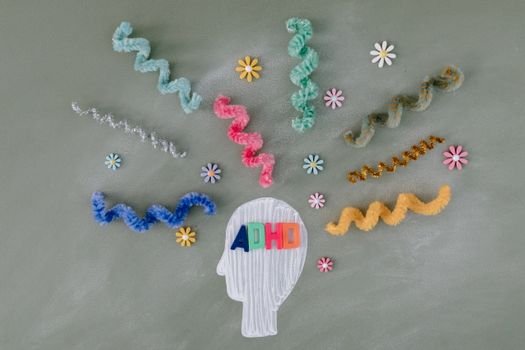
ADHD affects much more than concentration. It can also affect impulse control, emotional regulation, motivation and the way you respond to reward.
That can make immediate rewards particularly difficult to resist.
If your brain is under-stimulated, something exciting can change that very quickly. If you’re overwhelmed, something that quiets your thoughts can feel equally powerful. And when a behaviour reliably changes the way you feel, your brain learns to go back to it.
For one person, that might be drinking at the end of the day because it helps them switch off. Someone else might spend money when they’re stressed, gamble because they crave excitement or lose hours to their phone because constant novelty keeps their brain occupied.
Some people use drugs because, at least initially, they seem to make their mind feel quieter or easier to manage.
None of this means that having ADHD automatically leads to addiction or compulsive behaviour. It doesn’t. But understanding the relationship can help explain why certain patterns become so difficult to interrupt.
What Can Compulsive Behaviour Look Like?
It isn’t always obvious. In fact, some compulsive patterns can look fairly normal, or even positive, from the outside.
Alcohol and drugs
Alcohol or drugs can become a way of slowing everything down. Some people describe drinking because it helps them relax, quiets their thoughts or makes social situations easier.
The difficulty comes when something you occasionally use for relief becomes the thing you increasingly rely on to feel OK.
Gambling
Gambling offers excitement, unpredictability and the possibility of an immediate reward. That combination can be incredibly stimulating.
It can also make it difficult to stop once you’re caught up in it, particularly when you’re chasing the feeling as much as you’re chasing the money.
Shopping and spending
Sometimes it isn’t really about wanting the thing you’re buying.
Browsing, choosing and purchasing something can give you anticipation and an immediate lift. That feeling disappears quickly, though, which can leave you wanting to recreate it, sometimes despite the financial consequences.
Scrolling and digital stimulation
Social media, videos, games and online content offer something new every few seconds.
You might pick up your phone intending to check one thing and realise an hour later that you’re still there. It can become an automatic response to boredom, discomfort, procrastination or simply having a spare moment with nothing else demanding your attention.
Work and productivity
Compulsive behaviour doesn’t always look unhealthy from the outside.
You can get praise for working constantly, taking on too much or always being busy. But if slowing down makes you uncomfortable, your self-worth depends on what you achieve, or work has become your main way of avoiding difficult feelings, it’s worth looking at what’s driving it.

1
Why “Just Stop” Doesn’t Work
By the time people come to me, they’ve often already tried being stricter with themselves.
They’ve deleted the app. Cut up the card. Promised they won’t drink during the week. Set limits. Told themselves that this time they really are going to stop.
Sometimes that works for a while.
But if the behaviour has been doing a job for you, removing it without understanding that job leaves a gap.
If alcohol is the only way you know how to switch your brain off, what happens when you stop drinking?
If shopping gives you something to look forward to when you feel flat, what replaces that feeling?
If scrolling is how you escape when you’re overwhelmed, what happens the next time you’re overwhelmed?
- That’s why I’m less interested in asking, “Why can’t you stop doing this?” and more interested in asking, “What is this doing for you?”
The answer gives us somewhere to work from.

Looking Beyond the Behaviour
When we start exploring these patterns, people often realise they’re connected to things they’ve been carrying for a long time.
You might have spent years feeling misunderstood or wondering why things that seem easy for everyone else feel so difficult for you. You may be dealing with chronic self-doubt, emotional overwhelm, burnout or a constant feeling that you should be doing better.
For some people, there’s also a deeply rooted belief that they’re lazy, difficult, too much or simply not good enough.
If you’ve lived with those feelings for years, it makes sense that you’d find ways to escape them, quieten them or compensate for them.
Changing the compulsive behaviour matters, particularly when it’s causing harm. But we also need to understand what keeps pulling you back to it.
How Coaching Can Help
Our work starts with getting curious about your patterns rather than judging them.
We look at what tends to happen before the behaviour, what you get from it in the moment and what makes certain situations harder to manage. We can also explore the role ADHD plays in your need for stimulation, your emotional responses and the way you react to urges and rewards.
From there, we can work on practical ways of managing triggers, regulating emotions and finding healthier ways to meet some of the needs the compulsive behaviour has been meeting.
There may also be beliefs that need challenging. If you’ve spent years thinking you’re unreliable, lazy or incapable of changing, simply knowing you have ADHD doesn’t automatically undo that.
I use my ART framework Accept, Release, Transform, to guide this process.
Accept
Release
Transform
We start by understanding and accepting what’s actually happening, work on releasing patterns and beliefs that are keeping you stuck, and then focus on building something different in their place.
If You Recognise Yourself in This
You might have spent a long time asking yourself why you keep doing something you know you don’t want to do.
There is usually more to that question than self-control.
For many people with ADHD, behaviours that eventually become a problem started because, at some point, they helped. They gave you stimulation, relief, distraction, calm or escape.
Understanding that doesn’t mean ignoring the consequences. It means you finally have somewhere more useful to start.
If you’d like to understand your own patterns and the role ADHD might be playing in them, you can learn more about my coaching process or arrange an initial conversation.
